Esteban Rada
Colombian Attorney
www.lawyerscolombia.com
Email: info@lawyerscolombia.com
Telephone: +57-311-7693976
In 2027, navigating the landscape of divorce in Colombia has become even more streamlined, particularly through the process known as a mutual agreement divorce, often referred to as express divorce. This legal mechanism allows couples to amicably dissolve their marriage with mutual consent, avoiding the complications and heartaches associated with adversarial court battles.
Understanding Mutual Agreement Divorce
The mutual agreement divorce in Colombia permits married couples to end their relationship cooperatively, eliminating the stress of a contentious legal process. This form of divorce is particularly beneficial as it encourages spouses to address critical areas such as child custody, property division, and spousal support collaboratively.
To begin the process, both partners must willingly agree to dissolve their marriage and come to terms on several important matters. These include dividing assets and liabilities acquired throughout the marriage, establishing custody arrangements for any minor children, and determining child support and visitation rights.
The Legal Process
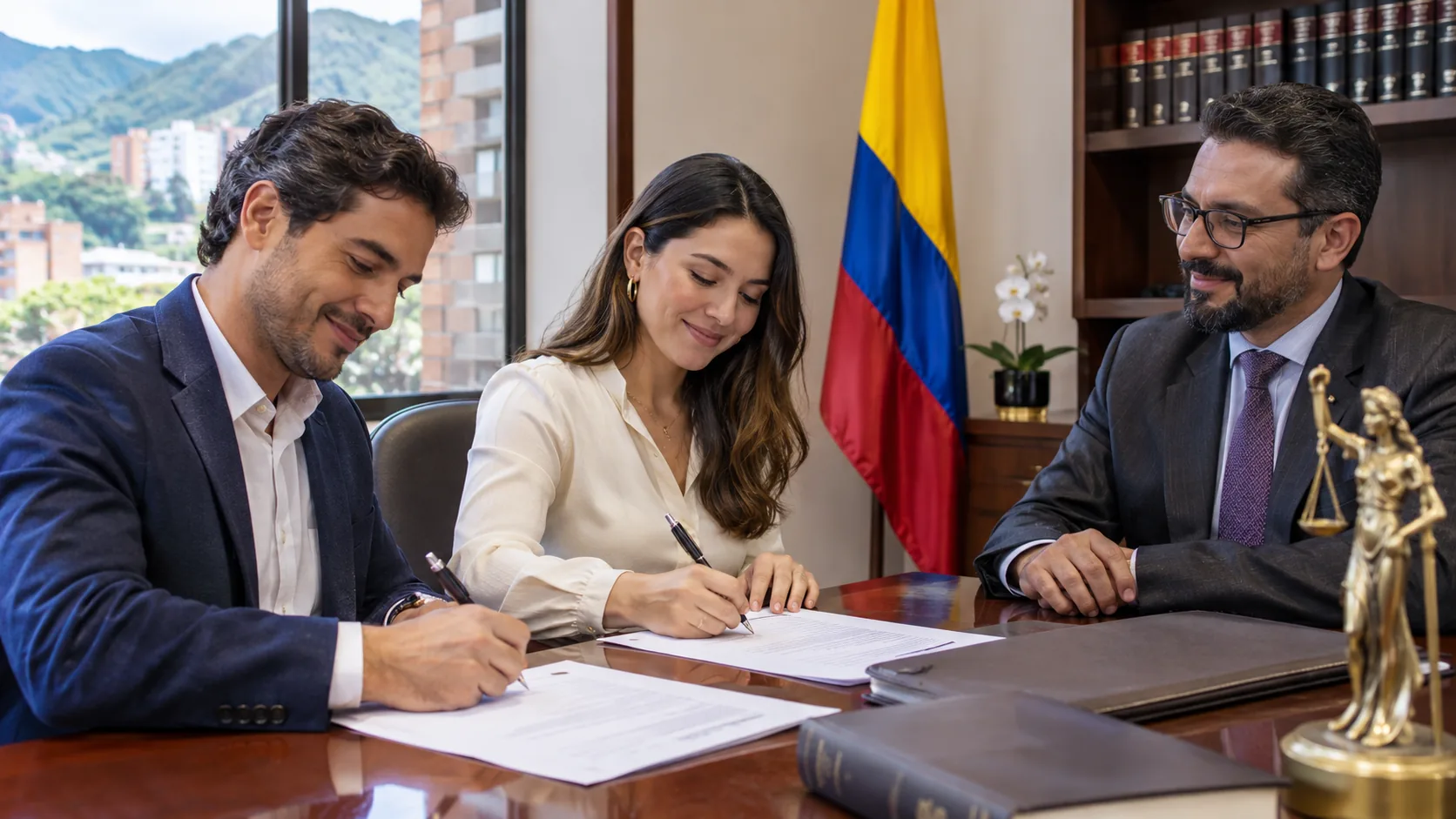
Initiating a mutual agreement divorce involves specific legal requirements. A qualified attorney must draft a “Mutual Consent Agreement,” outlining the spouses’ consensus on all significant issues. This document is then submitted to a Colombian notary for review and approval.
If children are involved, the notary will consult with a social worker to ensure the agreed arrangements are in the children’s best interest. Once approved, the notary will issue a divorce decree, officially terminating the marriage. Adhering to all procedural requirements is essential for the divorce to be legally valid and recognized.
Advantages of Mutual Agreement Divorce
Opting for a mutual agreement divorce is often seen as a more efficient and cost-effective route compared to contested divorces, which can lead to prolonged legal disputes. By fostering an environment of cooperation and understanding, both parties can significantly reduce the stress, emotional strain, and financial burdens associated with divorce litigation.
A key benefit of this approach is the ability for couples to maintain a healthier relationship post-divorce, especially when children are involved. By collaboratively negotiating custody and other vital matters, parents can create a co-parenting dynamic that prioritizes their children’s well-being and stability.
Conclusion
In 2027, mutual agreement divorce continues to serve as a practical and peaceful alternative for couples wishing to dissolve their marriage in Colombia. By emphasizing joint decision-making and collaboration, this process minimizes conflict and aids in fostering a constructive post-divorce relationship, ultimately benefiting all parties involved.
If you are considering a mutual agreement divorce in Colombia, it’s crucial to consult with a knowledgeable attorney to guide you through the process and ensure your rights are protected.
Esteban Rada
Colombian Attorney
www.lawyerscolombia.com
Email: info@lawyerscolombia.com
Telephone: +57-311-7693976